
Simulation of the Position Resolution of a Scintillation Detector
I wrote my bachelor's thesis after conducting research in the ASACUSA collaboration at CERN.
The ASACUSA experiment studies antihydrogen – the antimatter counterpart of ordinary hydrogen atoms. According to fundamental physics principles, matter and antimatter should behave identically (a concept called CPT symmetry). By precisely measuring antihydrogen's properties and comparing them to hydrogen, scientists can test whether this symmetry truly holds.
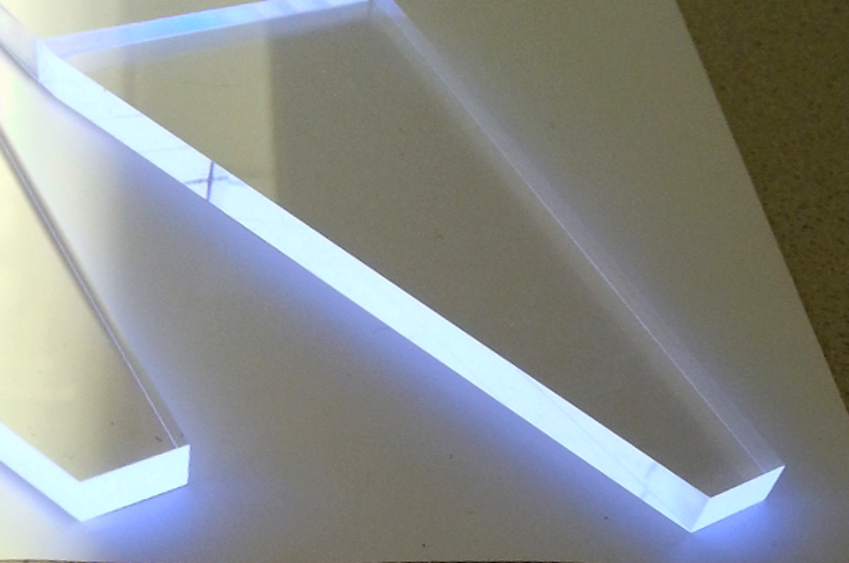
As part of my research work, I simulated one of the detectors used to track antihydrogen atoms as they travel through the experimental apparatus. Specifically, I studied how accurately the detector can determine where a particle hits its surface – a crucial factor for the precision of the overall measurement. My simulations helped the collaboration understand the detector's limitations and optimize the experimental setup.
Read my Bachelor's thesis to find out all the details.
Key facts
- Project: Bachelor's thesis (TU Wien, Austria)
- Collaborations: ASACUSA (CERN, Geneva, Switzerland)
- Institute: Stefan Meyer Institute for Subatomic Physics (SMI, Vienna, Austria; now the Marietta Blau Institute (MBI))
- Date: September 2014
- Time invested: 4 months
- Links:
- Keywords: particle physics, anti-hydrogen spectroscopy, detector simulation, data analysis
Abstract
In the Standard Model of particle physics, CPT symmetry is regarded as invariant. In order to test this prediction, the ASACUSA collaboration ("Atomic Spectroscopy And Collisions Using Slow Antiprotons") aims to make a very precise measurement of the hyperfine structure of antihydrogen with a Rabi-like experiment. The comparison of the experimentally-obtained antihydrogen transition frequencies with those of hydrogen allows for a direct test of CPT symmetry. The spectrometer line of the ASACUSA HBAR-GSHFS ("Antihydrogen ground state hyperfine splitting") experiment consists of a particle source, a spin flip-inducing microwave cavity, a spin-analyzing sextupole magnet, and a detector. In the course of the work for this thesis, a single scintillation detector as used in the hodoscopes of the detector at the end of the spectrometer line was simulated using the particle physics toolkit Geant4. Subsequent analysis of the simulation data allows for an estimate of the minimal uncertainty in determining the location of a particle's point of impact on the detector geometry.