
Signal Reconstruction and Crosstalk Analysis for a CBM-STS Silicon Microstrip Sensor Prototype
I conducted this research project as an extension of my summer student program at GSI/FAIR in Germany.
The CBM experiment is a future particle detector being built to study heavy-ion collisions—events where atomic nuclei are smashed together at extremely high energies to recreate conditions similar to those in neutron stars and the early universe.
As a junior researcher, I analyzed the performance of silicon sensor prototypes that will be used to track particles in the detector. My work focused on improving how we measure and interpret the electrical signals these sensors produce when particles pass through them. I developed algorithms to better reconstruct particle tracks and studied how electrical signals can "leak" between neighboring sensor strips – a phenomenon called crosstalk. These quality assurance studies help ensure the sensors will work reliably when the experiment begins operation.
Key facts
- Project: Extended research project following the GSI/FAIR International Summer Student Programme 2016
- Collaborations: CBM-STS (Silicon Tracking System group of the Compressed Baryonic Matter Experiment)
- Institute: GSI Centre for Heavy-Ion Research / FAIR, Darmstadt, Germany
- Date: Jan 2017
- Time invested: 7 months
- Keywords: semiconductors, high-energy particle physics, heavy-ion collisions, data analysis, quality assurance
Abstract
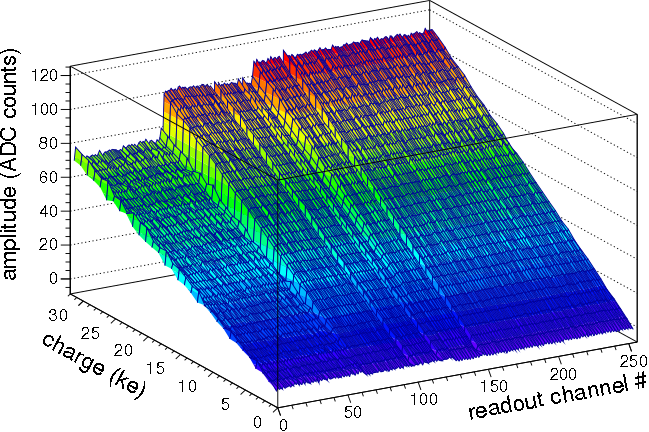
Silicon Microstrip Sensors as used in the Silicon Tracking System (STS) of the Compressed Baryonic Matter (CBM) experiment at FAIR/GSI, Darmstadt, Germany, have to provide a high track reconstruction efficiency as well as a low material budget. They are undergoing extensive quality assurance measures and are studied for their potential use in future CBM-STS. In this work, we describe the measurement and data acquisition processes for a sensor prototype using the Alibava System readout electronics. We refine the gain and offset determination procedure for the readout channels by implementing a nonlinear fitting method, which compensates for non-physical preamplifier outputs at small induced charges. Further, a cluster reconstruction algorithm was developed and applied to the measurement data, which dynamically searches for strip clusters of variable sizes in order to reconstruct signal spectra. In the reconstruction process, the background event distribution is estimated and subtracted by assuming symmetric noise and using information about clusters having the least significant amplitudes. The obtained signal distribution can be well fitted with a Landau-Gauss convolution function having its most probable value of the Landau density at Δp=20.08 ± 0.16 (stat.) ± 0.54 (syst.) kiloelectrons~(ke). In order to study the signal spread caused by charge diffusion in the sensor bulk material, we also investigate interstrip crosstalk effects in two-strip-cluster events, where we find a charge-sharing rate between strips of 16.3%. Additionally, two cross-check analyses are performed: 1) Cuts on the signal-to-noise ratios of the clusters (SNR ≥ 4) are set, which yields results compatible with prior analyses. 2) A different approach of generating two-strip-cluster data is pursued which is able to reproduce the general features of the charge distribution between strip pairs. This method, however, also shows deviations from preceding results, e.g., a charge-sharing rate of 5.6% (7.3%) towards strips to the left (right). Ultimately, we hope that our results will prove themselves useful in choosing analysis methods and code implementations for future CBM-STS precision measurements.